History
The History of Dunluce Castle
From a possible 13th-century de Burgh fortress to the ruined seat of Clan MacDonnell — the full timeline of the castle behind Castle Greyjoy.
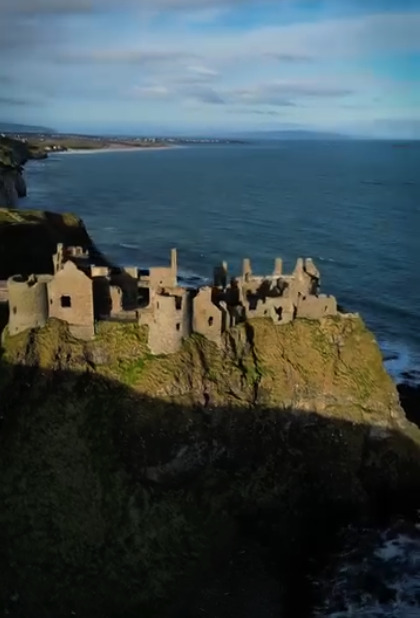
Origins: A Contested 13th–14th Century Start
Local tradition credits Richard Óg de Burgh, 2nd Earl of Ulster and father-in-law of Robert the Bruce, with an early fortress at Dunluce in the 13th century — though no trace of that structure survives, and archaeologists disagree on the date. Historian T. E. McNeill argues the site cannot have been fortified before around 1360, while other researchers place the earliest surviving work in the late 14th century. What's certain is that by the early 16th century, the McQuillan family held Dunluce as "Lords of the Route" — the section of Ulster's northeast coast running from Ballycastle to the Clogh River.
The McQuillan Castle (early 1500s)
The core of the ruins standing today was built by the McQuillans before 1513. They added the large eastern tower still known as MacUillin's Tower, along with drum towers and a curtain wall that gave the castle its defensive shape. For decades, Dunluce anchored McQuillan power along the coast.
The MacDonnells Take Dunluce (mid-to-late 1500s)
The McQuillans and the rival MacDonnell clan fought two separate battles over the region, and the MacDonnells eventually took Dunluce. Accounts differ on exactly how — one version describes a decisive battle, another tells of Evelyn MacQuillan marrying Colla MacDonnell and bringing the castle into MacDonnell hands through the match. When Colla died, his younger brother Sorley Boy MacDonnell inherited Dunluce.
Sorley Boy MacDonnell and the 1584 Recapture
English forces under John Perrot, Lord Deputy of Ireland, captured Dunluce from Sorley Boy in 1583. He held it for barely a year before retaking it in 1584 through what local history describes as an inside job: one of his men infiltrated the English garrison, then lowered a basket from a castle window down to a boat where Sorley Boy and his men were waiting below. Sorley Boy later swore allegiance to Queen Elizabeth I, and his son Randal was made 1st Earl of Antrim by King James I.
The Spanish Armada Connection (1588)
In 1588, the Girona — a galleass from the Spanish Armada fleeing storms after the failed invasion of England — wrecked on the rocks near Dunluce. Sir James MacDonnell salvaged two cannons from the wreck and mounted them on the castle's gatehouses. The rest of the ship's recovered cargo was reportedly sold, with proceeds going toward improving the castle.
The Night the Kitchen Fell Into the Sea (1639)
The castle's fortunes turned during a storm in 1639, when part of the kitchen — built directly over the cliff edge — collapsed into the Atlantic below, killing several servants working inside at the time. The event marked the beginning of the MacDonnells' gradual withdrawal from Dunluce as a full-time residence.
Decline and Abandonment
Through the later 17th century, Dunluce was progressively abandoned as the family's main seat, and the castle fell into the ruined state it remains in today. Weather, coastal erosion, and the removal of usable stone for other buildings all contributed to its decline over the following centuries.
From Ruin to Guardianship Site
Dunluce Castle passed into state care and today operates as a managed historic site with a visitor centre, ticketed entry, and ongoing conservation work — a public monument rather than a private residence.
Key Figures
Richard Óg de Burgh
2nd Earl of Ulster, traditionally linked to the earliest fortification at Dunluce, though the date is disputed by archaeologists.
The McQuillan Clan
Built the core of the surviving castle before 1513 and held the site as "Lords of the Route" until losing it to the MacDonnells.
Sorley Boy MacDonnell
Recaptured Dunluce in 1584 after losing it to English forces the year before, later swearing allegiance to Elizabeth I.
Randal MacDonnell, 1st Earl of Antrim
Sorley Boy's son, made Earl of Antrim by King James I, continuing MacDonnell control of the castle into the 17th century.
See the History Up Close
Guided tours bring this timeline to life on-site, from the McQuillan tower to the spot where the kitchen fell into the sea.
Book Your Dunluce Castle Tour Now